I2Systems
LED Lighting Lumens Explained
If you're looking to truly understand how the amount of light emitted by LED lighting is measured, this article on LED Lighting Lumens Explained will provide you with the essential information. Understanding lumens is crucial for making informed decisions about your lighting projects, optimizing both the efficiency and quality of the illuminated spaces.
What are lumens and why are they important?
Lumens are the unit of measurement that quantifies the total amount of visible light emitted by a light source. In the context of LED lighting, it's essential to understand that it's not just about the electrical power (in watts) a bulb consumes, but how many lumens it actually provides. This measurement is especially important for construction and interior design professionals, as proper lighting can make a significant difference in any space, from homes to offices and warehouses. Therefore, when selecting LED lighting for a project, it is crucial to consider the number of lumens. For example, a 10-watt LED bulb can emit between 800 and 1200 lumens, which is sufficient to adequately illuminate a moderately sized space. Choosing the correct number of lumens will ensure that the light is both efficient and effective for the specific needs of your project.
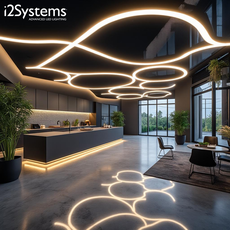
Differences Between Lumens and Watts in LED Lighting
Confusion between lumens and watts is common. While watts measure a bulb's energy consumption, lumens measure its light output. This means that a lower wattage does not necessarily imply less light. For example, a 60-watt incandescent bulb produces around 800 lumens, while an equivalent LED bulb consumes only about 8-12 watts to produce the same amount of light. This difference is crucial for those looking to optimize energy efficiency without sacrificing lighting quality. LED technology allows designers and architects to offer lighting solutions that reduce energy consumption without compromising the brightness of a space, resulting in significant savings on energy bills in the long run. How to calculate the lumens needed for your space Calculating how many lumens you need for a given space may seem complicated, but there are formulas and tools that make it easier. Generally, around 100-200 lumens per square meter is recommended for work areas, while relaxation areas may require less. For larger or more complex projects, a lighting study that considers the use of the space and aesthetic preferences is recommended. Additionally, it is important to consider other factors such as the color of the walls and furniture, which can affect the perception of light. For example, light colors reflect more light, while dark colors can absorb it. By combining these elements in the lumen calculation, you can achieve more efficient and attractive lighting, ensuring that every corner of your project is illuminated appropriately and harmoniously.
Selecting the right bulb, based on the appropriate number of lumens, thus becomes an essential task for designers and engineers seeking to maximize the functionality and aesthetics of their projects. The use of light simulation tools and specialized software can be a great help in predicting how light will behave under different conditions, thus providing a more scientific approach to the selection of lighting systems.
- Seguidores
- 0
- Conjuntos de datos
- 0
- Nombre de usuario
- led-lighting-lumens-explained
- Miembro Desde
- 29 de diciembre de 2025
- Estado
- active